
Microbial Biosensor for Environmental Monitoring
A four-bioreactor study identified the pH, dissolved oxygen, iron supplementation, and harvest timing that improve bacterial pigment production.
A controlled bioreactor study reveals the key process levers that drive target-pigment production in our proprietary bacterial strain - and why getting them right matters.
The challenge
Bacteria do not perform the same way in every environment. Temperature, acidity, available oxygen, and trace minerals can all push a microorganism's behaviour in very different directions - encouraging it to multiply rapidly, to slow down, or to switch on entirely different biological programmes. For biotechnology applications, identifying the precise conditions that unlock a desired behaviour is critical.
This study focused on a proprietary purple non-sulphur bacterium of significant interest in biotechnology. The molecule we wanted to maximise was the target pigment - a light-harvesting molecule with potential applications in photovoltaics, medical imaging, and photodynamic therapy. The question was simple: which combination of conditions would make the bacteria produce the most of it?
Rather than evaluating conditions sequentially, we used a structured experimental design with parallel bioreactors, each operated under a distinct set of conditions, to identify the strongest combination efficiently.
How the experiment was designed
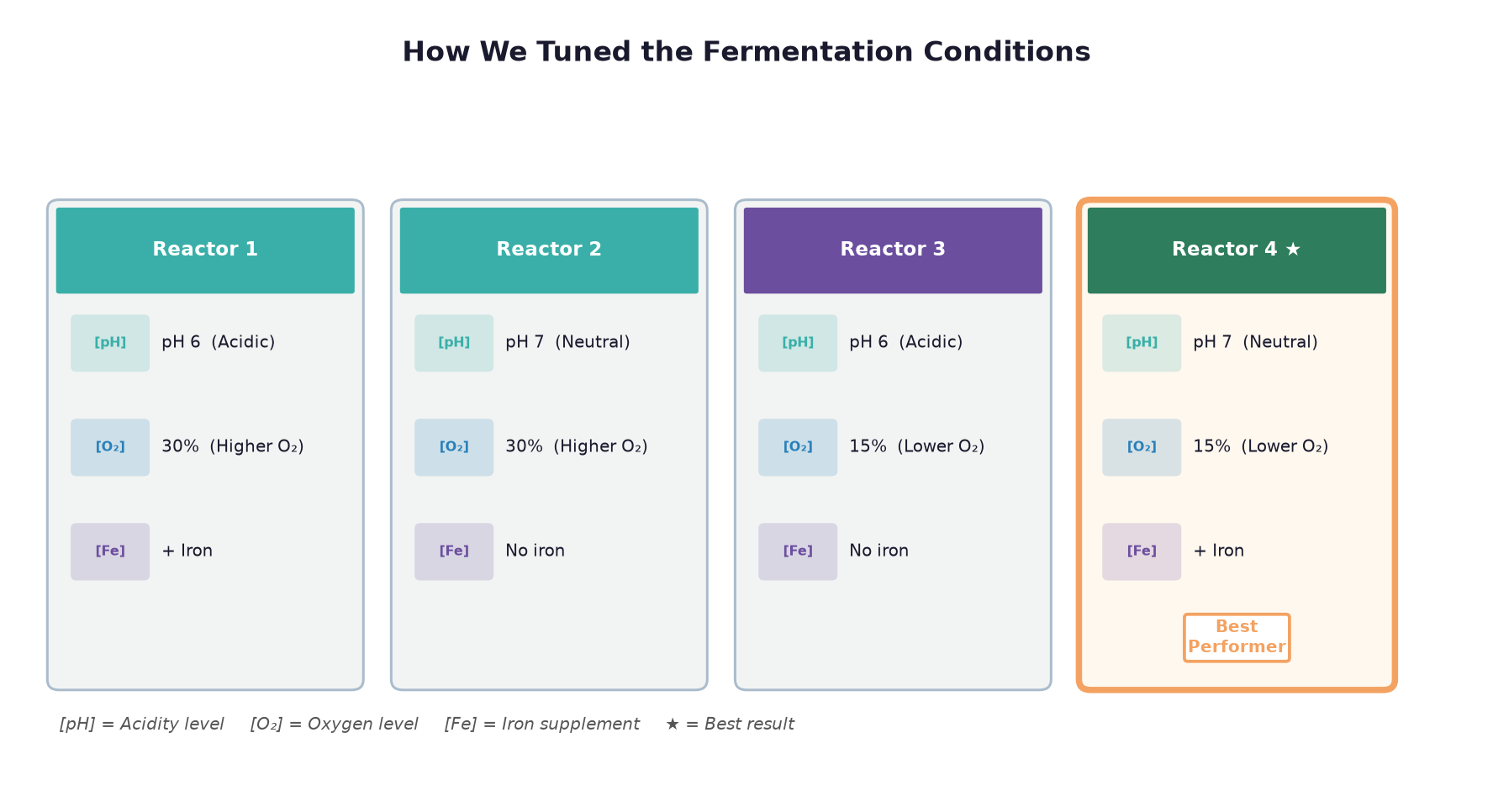
Rather than guessing or testing one variable at a time, we employed a fractional factorial design - an efficient approach that allowed us to evaluate multiple process variables in parallel.
The process variables we tuned were acidity (pH), the amount of dissolved oxygen in the culture (DO), and whether we supplemented the growth medium with a small amount of iron in the form of ferric citrate.
How the bacteria grew
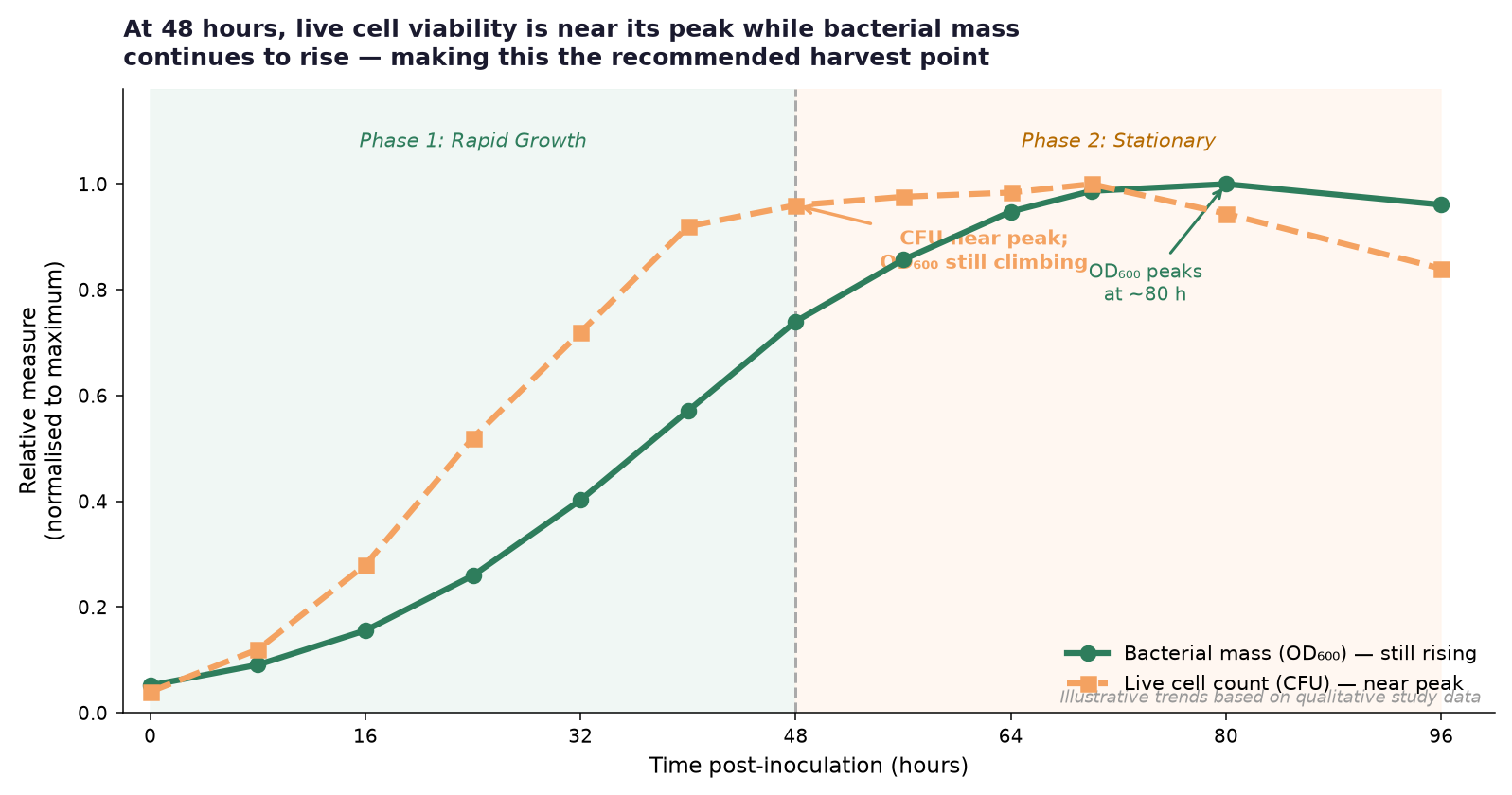
Across the reactors, growth followed a recognisable pattern. During the early fermentation stage, the bacteria multiplied rapidly. Later, the number of live, colony-forming cells plateaued while bacterial mass continued to accumulate. This divergence between cell count and cell mass is well known: as nutrients are depleted, cells stop dividing but may still accumulate internal molecules.
Which conditions produced the most pigment?
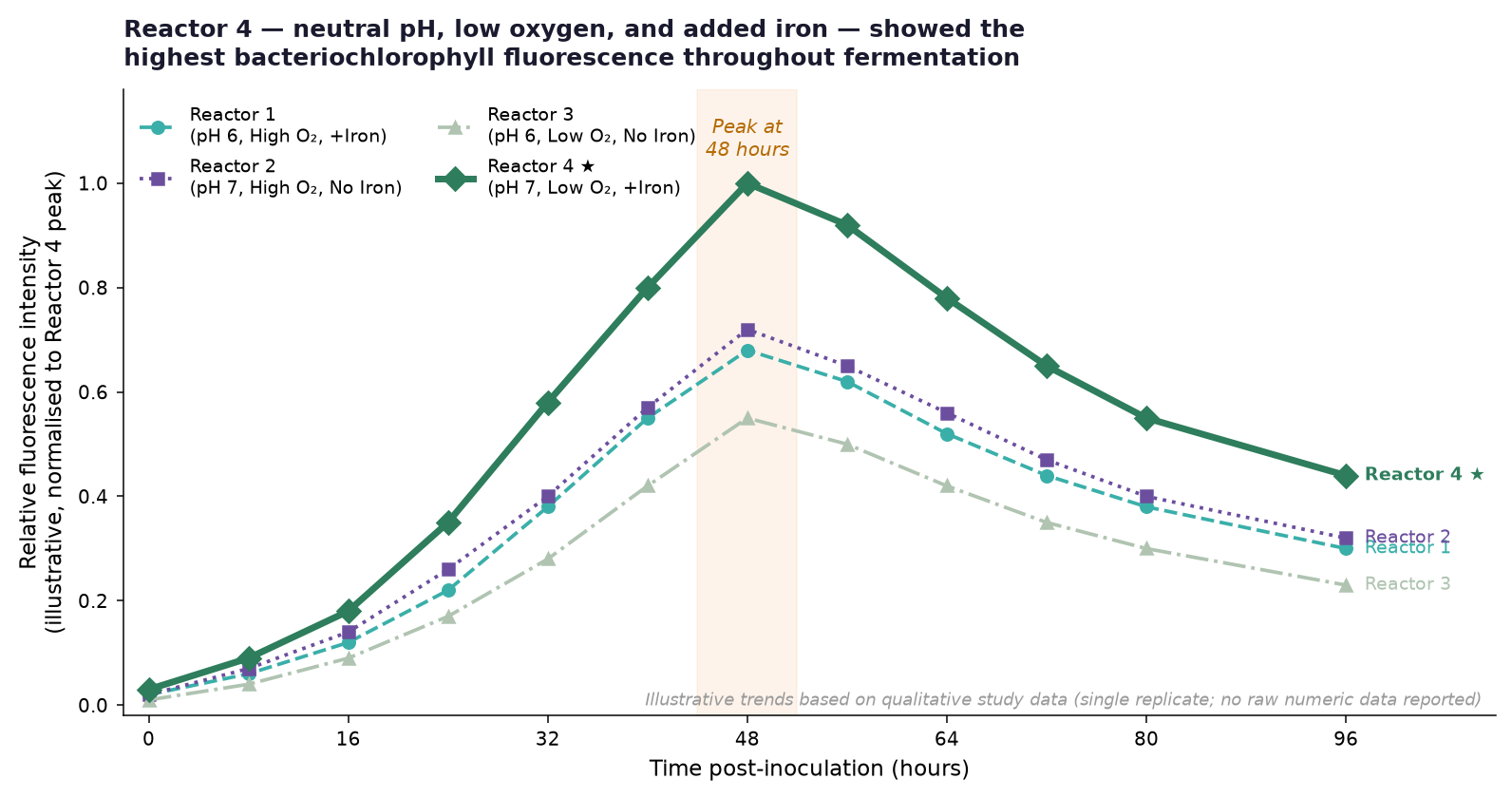
The target pigment is fluorescent - it glows when illuminated at the right wavelength. We used this property to track its relative abundance continuously throughout fermentation without disturbing the cultures. The results showed a consistent and striking pattern.
Key process levers - at a glance
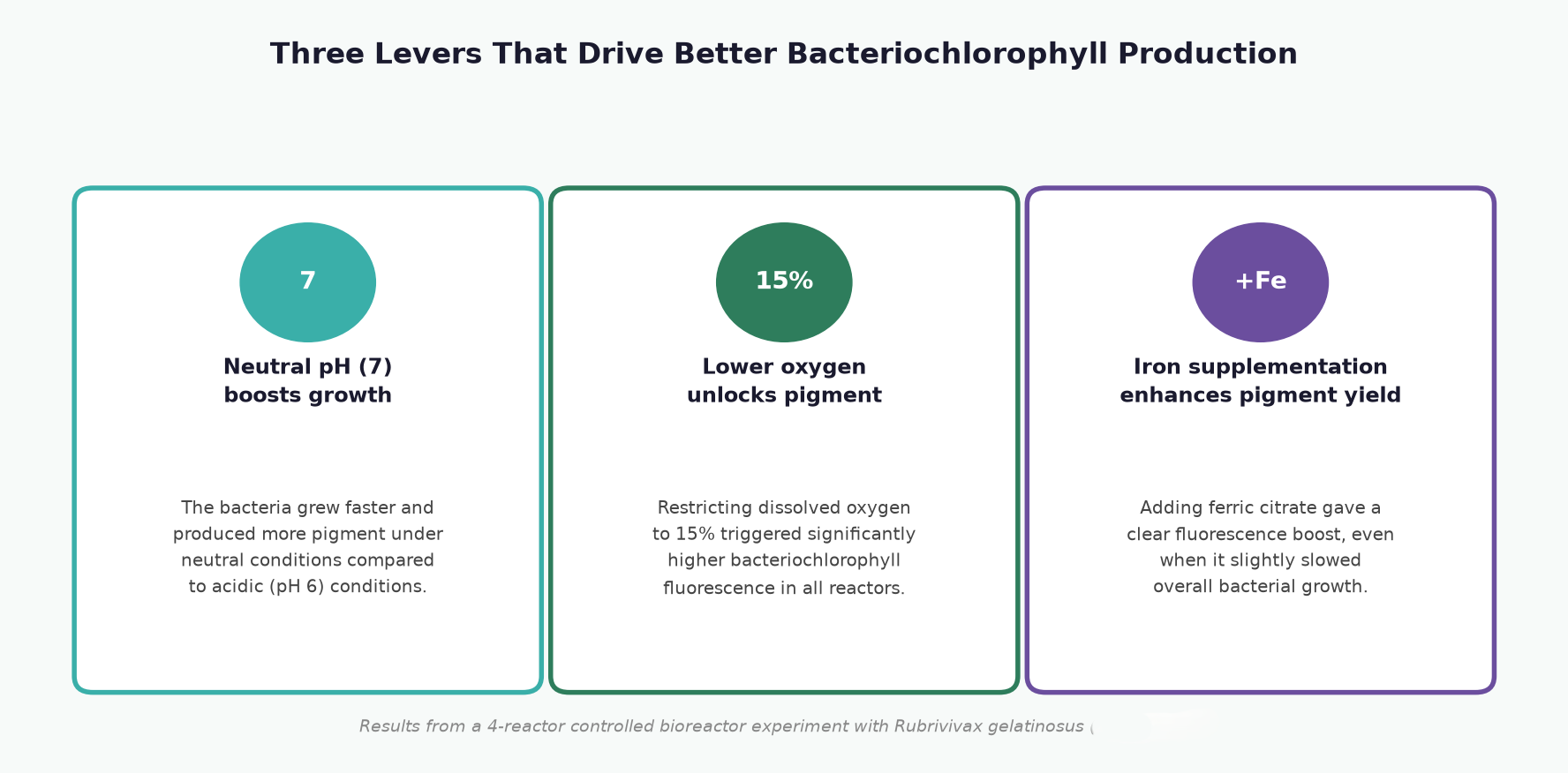
Taken together, the results reveal independent levers for improving target-pigment output - each adjustable individually, providing actionable process knowledge for scale-up.
What this means
This study translates a biological question into a precise, actionable process specification. Starting from bench scale, we now have a well-defined directional recipe:
The next phase will apply these parameters at a larger bioreactor scale using the Solaris fermentation system. This scale-up will test whether the selected conditions translate to larger culture volumes and begin to establish commercially relevant yield data.
