
Pichia Protect™
Protease-Deficient Platform for High-Stability Recombinant Protein Production
A Protease-Deficient Platform for High-Stability Protein Production
In yeast-based production systems, intracellular and vacuolar proteases can degrade recombinant proteins during expression and fermentation — particularly under high-expression or stress conditions. The result is often truncated products, reduced functional yield, and inconsistency from one production batch to the next.
Alagene Pichia Protect™ addresses this at the strain level. It’s a proprietary protease-deficient derivative of the yeast production platform, engineered to eliminate a major proteolytic activity within the background and reduce degradation pressure during cultivation. The strain is Generally Recognized As Safe (GRAS) for industrial and food applications.
The result is better preservation of full-length recombinant proteins, enhanced batch-to-batch consistency, and reduced intracellular proteolysis — all while maintaining growth performance and genetic stability. Pichia Protect™ is compatible with both constitutive and inducible expression systems, and works with genome-integrated and multi-copy expression formats, including Alagene’s methanol-free constitutive systems and scalable fermentation processes.
It’s particularly valuable for protease-sensitive enzymes, multi-domain proteins, and structurally complex or unstable proteins that are otherwise prone to degradation during production.
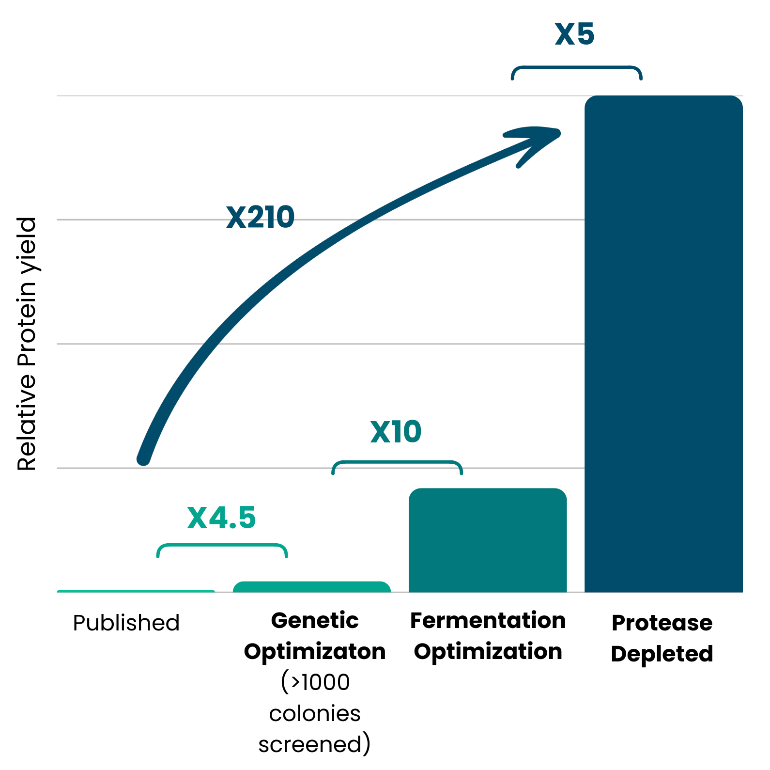
A case study producing a model recombinant protein on Alagene’s Pichia pastoris platform illustrates the additive value of combining strain and process engineering: genetic construct optimization and high-throughput clone screening of more than 1,000 colonies delivered a ~4.5-fold increase in yield, fermentation process optimization added a further ~10-fold increase, and deploying the protease-deficient Pichia Protect™ strain contributed an additional ~5-fold increase — an overall ~210-fold improvement in protein yield compared to the initial baseline strain.
Pichia Protect™ is maintained within Alagene’s proprietary strain portfolio and is available under defined service or licensing agreements, ensuring controlled use, regulatory traceability, and clear ownership of resulting developments.
